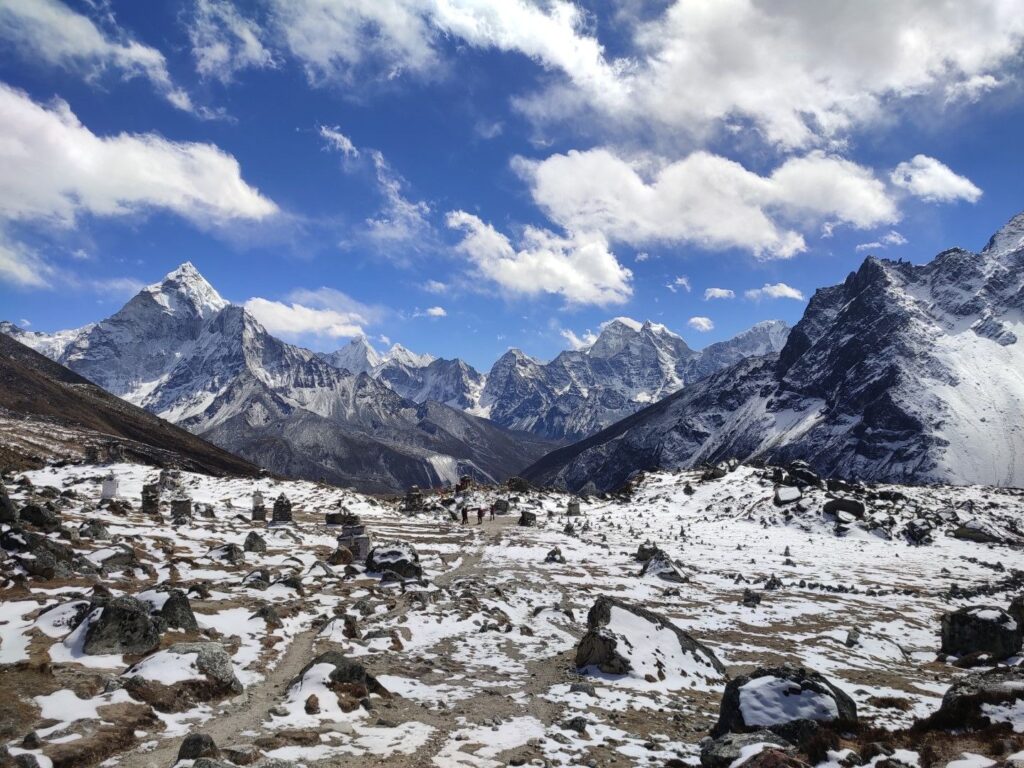
If you are planning the Everest Base Camp trek, you are likely wondering what mountains you will actually see along the way. Many people imagine constant views of Everest from the start, but the reality is more layered and rewarding.
The trek builds gradually. You begin in forested valleys and small villages, then move into high alpine terrain where the world’s tallest peaks begin to dominate the skyline. Each day brings new perspectives and closer encounters with the Himalayas.
In this guide, you will learn which mountains you will see on the Everest Base Camp Trek, where to see them, and what makes each one stand out. This will help you understand the landscape better and set the right expectations before your trek.
What Makes Everest Base Camp Views Unique
The Everest Base Camp trek offers a different kind of mountain experience compared to other routes in Nepal. The mountains feel massive and distant at first, but slowly become more defined as you gain elevation.
Unlike Annapurna, where you stand surrounded by peaks, the Everest region gives you a mix of valley views, ridgelines, and towering summits that appear in stages.
Key features of the views include:
- Gradual reveal of major Himalayan peaks
- Long valley perspectives with layered mountains
- Close-up glacier and icefall views near base camp
Major Everest Base Camp Mountains You Will See
Mount Everest
Mount Everest rises to 8,848.86 meters (29,031.7 ft) and is the highest mountain in the world. Despite this, you do not see its full summit clearly from base camp itself.
The best views of Everest come from viewpoints like Kala Patthar and sections near Namche Bazaar. From these spots, you can see its iconic black pyramid peak rising above surrounding mountains.
Best viewpoints include:
- Namche Bazaar viewpoint
- Tengboche
- Kala Patthar for the clearest view
Lhotse
Lhotse stands at 8,516 meters (27,940 ft) and is the fourth highest mountain in the world. It sits directly next to Everest and often appears connected to it.
From certain angles, Lhotse looks even more dominant due to its steep and dark face. It becomes very prominent as you move closer to base camp.
Nuptse
Nuptse rises to 7,861 meters (25,791 ft) and forms a long ridge that you see from Everest Base Camp. It often blocks direct views of Everest from the base camp area.
Its rugged and jagged structure adds to the dramatic feel of the Khumbu Glacier region.
Ama Dablam
Ama Dablam reaches 6,812 meters (22,349 ft) and is considered one of the most beautiful mountains in Nepal. Its sharp, symmetrical shape makes it easy to recognize.
It stands out clearly from:
- Namche Bazaar
- Tengboche
- Pangboche
This peak often becomes a favorite for trekkers due to its unique appearance.
Thamserku
Thamserku rises to 6,623 meters (21,729 ft) and is one of the first major peaks you see after arriving in Lukla. It towers above the Dudh Koshi valley.
Its steep face and proximity to the trail make it visually impressive in the early days of the trek.
Kangtega
Kangtega stands at 6,782 meters (22,251 ft) and is often seen alongside Thamserku. It has a sharp ridgeline and a distinctive snow-covered summit.
You will notice it clearly in the Namche Bazaar region.
Pumori
Pumori rises to 7,161 meters (23,494 ft) and is one of the most prominent peaks visible from Kala Patthar. It stands close to Everest and offers dramatic views.
Its pyramid shape makes it a striking part of the skyline near base camp.
Where You See the Best Mountain Views on the Trail
Lukla to Namche Bazaar: This section offers your first views of Himalayan peaks. You will see mountains like Thamserku and Kusum Kanguru rising above the valley. The views are still distant, but they build excitement for what lies ahead.
Namche Bazaar: Namche is one of the best early viewpoints on the trek. From the ridge above the town, you can see Everest, Lhotse, and Ama Dablam on clear days. This is also where many trekkers first feel the scale of the Himalayas.
Tengboche: Tengboche offers one of the most famous panoramic views on the trek. You get a wide-angle perspective of Everest, Lhotse, Ama Dablam, and surrounding peaks. The monastery setting adds to the overall experience.
Dingboche and Lobuche: As you move higher, the landscape becomes more open and rugged. You begin to see glaciers and larger mountain walls. Lhotse and Nuptse become more dominant in this section.
Everest Base Camp and Kala Patthar: Everest Base Camp gives you close views of the Khumbu Icefall and surrounding peaks like Nuptse. For the best view of Everest itself, you need to hike to Kala Patthar. From here, you get a clear and unobstructed view of Everest along with Pumori and other peaks.
What Time of Day Offers the Best Views
Mountain visibility changes throughout the day, especially in the Everest region where weather can shift quickly.
For the best experience:
- Early morning offers the clearest and most stable views
- Midday can bring clouds and haze
- Evening provides warm light but visibility may vary
Starting early each day improves your chances of seeing clear peaks.
Seasonal Impact on Mountain Views
Spring (March to May): Spring offers a mix of clear mornings and mild temperatures, making it a popular trekking season. Visibility is usually good in the early part of the day, though clouds may build later. The lower regions also feature blooming rhododendrons, adding color to the trek.
Autumn (September to November): Autumn provides the most reliable mountain views with very clear skies and stable weather. Visibility remains strong throughout the day, making it the best season for seeing Everest and surrounding peaks clearly.
Winter and Monsoon: Winter brings colder temperatures but can still offer clear skies, especially in the mornings. Monsoon season, on the other hand, brings heavy cloud cover and limited visibility. For clear mountain views, spring and autumn are the best choices.
Practical Insights for Better Mountain Viewing
To make the most of the everest base camp mountains experience, keep these tips in mind.
- Plan Your Timing: Start trekking early each day. You will reach viewpoints before clouds build up.
- Choose the Right Season: Autumn offers the clearest views, while spring provides a balance of scenery and weather.
- Stay Flexible: Weather can change quickly, so allow buffer days if possible.
- Pick Good Viewpoints: Spend extra time at places like Namche and Kala Patthar for better views.
- Use a Guide for Insight: A guide can help identify peaks and share useful context.
Conclusion
The Everest Base Camp trek is not just about reaching base camp. It is about experiencing the gradual reveal of the world’s highest mountains.
From early views of Thamserku to the iconic sight of Everest from Kala Patthar, each stage of the trek offers something new. The journey builds slowly, making the final views even more rewarding.
If you understand where and when to expect these views, you will appreciate the trek on a deeper level. The mountains are not just landmarks. They are part of the entire experience.
Frequently Asked Questions
Can you see Mount Everest from base camp?
No. Everest is mostly hidden from base camp by surrounding peaks. The best view is from Kala Patthar.
Which mountain is the most beautiful on the trek?
Ama Dablam is often considered the most beautiful due to its sharp and symmetrical shape.
When do you first see Everest?
You can see Everest for the first time from viewpoints near Namche Bazaar on clear days.
Which season offers the best views?
Autumn provides the clearest skies, while spring also offers good visibility with added scenery.
Do clouds affect mountain visibility?
Yes. Clouds often build in the afternoon, which is why early morning views are usually the best
About the Author
